

2200K or 2700K: How to Choose Warm Light
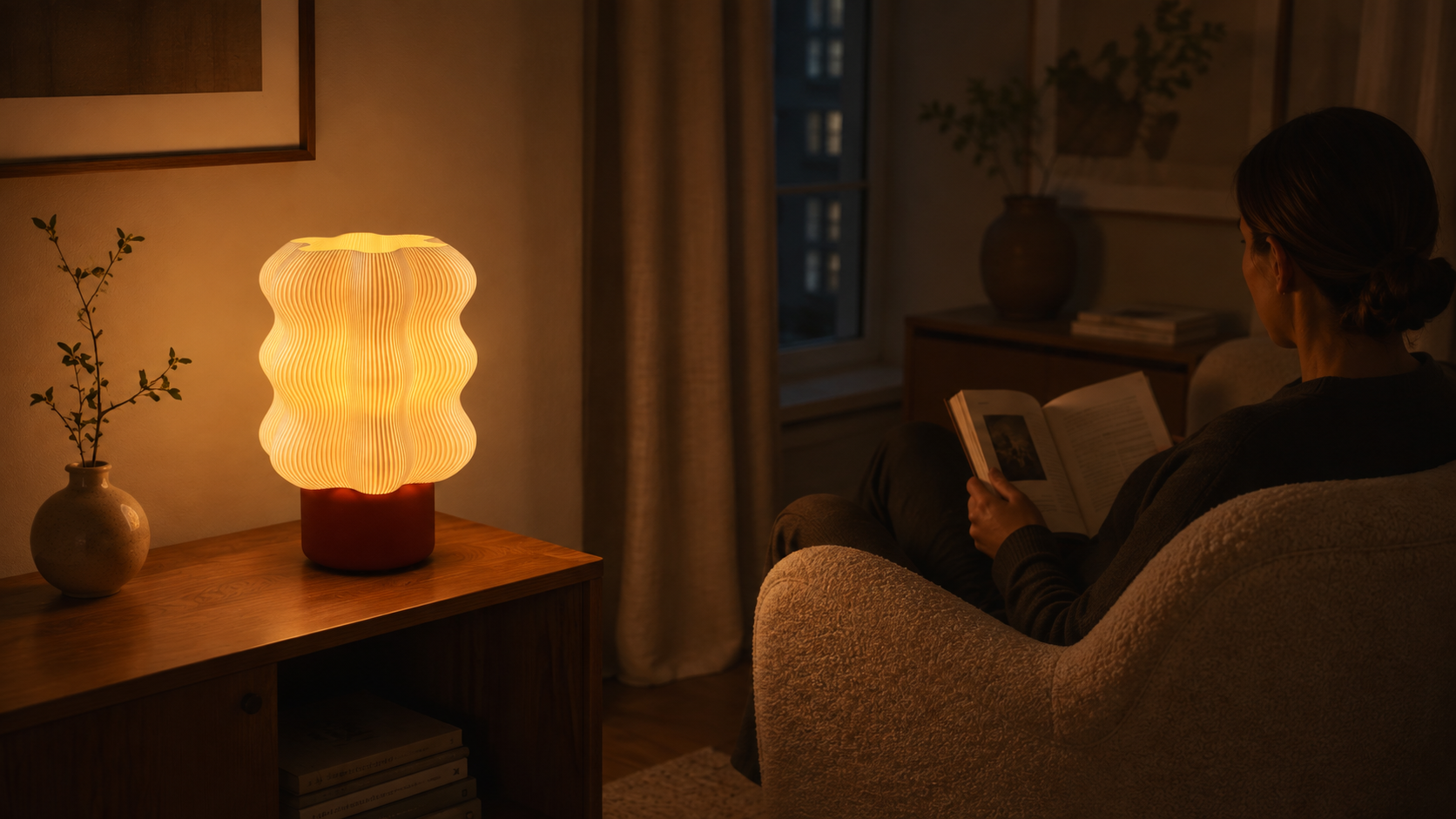
2200K gives a deeper, more amber light reminiscent of candlelight, while 2700K is the classic warm light you know from ordinary incandescent bulbs. The difference is small in numbers but clear in a dark room in the evening.
What the Kelvin number means
Kelvin (K) describes the colour temperature of light. The lower the number, the warmer and more yellow/orange the light. The higher the number, the whiter and cooler it becomes.
For the home, most people stay below 3000K, since light above this can quickly feel cold or office-like in a living room or bedroom.
2200K: deep and calm
2200K resembles the light of a candle or an old incandescent bulb on a low setting. It is ideal for moments when a room should feel intimate and calm, for example in the evening in the living room or at bedtime.
The downside is that 2200K can feel too yellow and dim if it is the only light source in a room where you also need to read or work.
2700K: versatile and familiar
2700K is the standard for most Danish homes and suits almost any interior. It is warm enough to feel cosy, but bright enough to be used as practical lighting from a table lamp or dining table.
How to choose
Our recommendation depends on what the lamp is mainly used for:
- Living room table lamp for evening cosiness: 2200K
- Table lamp also used for reading: 2700K
- Bedroom and night light: 2200K
- Hallway and practical areas: 2700K
Smart light makes the choice easier
With a dimmable or colour-temperature-adjustable bulb, such as the WiZ bulbs we recommend for our lamps, you do not have to choose once and for all. You can dim towards 2200K in the evening and up towards 2700K when the light needs to be more functional.