What Is PLA, and What Is It Made From?
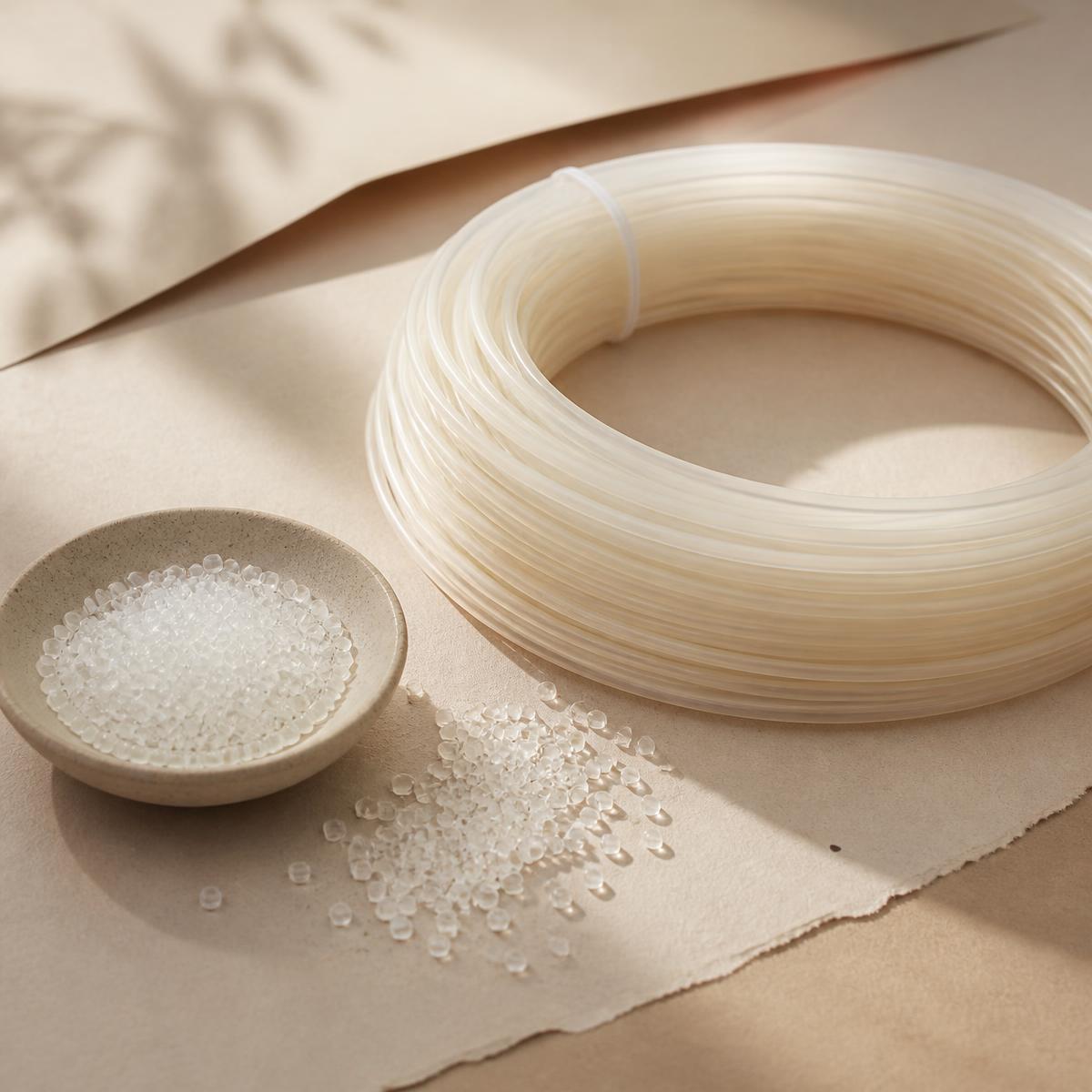
PLA, or polylactic acid, is a bioplastic made from sugars derived from plants such as corn or sugarcane. It is the material our lamp shades are primarily made from.
From plant to plastic
PLA is produced by extracting sugars from plant-based feedstocks, which are then fermented and converted into lactic acid. The lactic acid is bonded into long chains, which eventually form the plastic pellets that PLA products are moulded or printed from.
The material is therefore plant-based at its origin, but it is still a plastic with the properties of plastic, not a natural material like wood or paper.
Why we use PLA for our lamp shades
PLA lets us print detailed, ribbed forms layer by layer with minimal material waste compared with many other production methods. It gives a lightweight, translucent material that spreads light softly, and it suits our layer-by-layer production in Sønderborg well.
Is PLA biodegradable?
The short answer is no, at least not under normal conditions. PLA can be broken down industrially under controlled temperature, humidity and microbial conditions where suitable facilities exist to accept it. Those conditions are not normally found in ordinary home compost, in ordinary soil or in nature.
We therefore do not call PLA biodegradable in everyday use, and we avoid promising something the material cannot deliver. Disposal should follow the local recycling and waste guidance where you live.
PLA compared with ordinary plastic
Unlike plastic based solely on crude oil, PLA's raw materials come from renewable crops. That does not change the fact that PLA behaves as a durable plastic in use, it is robust, withstands normal household use, and is not intended to break down over time.